The Fly Transformation Effects: Practical FX Breakdown
Introduction
Few films have reshaped the horror genre as viscerally as David Cronenberg’s The Fly (1986). A disturbing yet tragic tale of transformation, the film follows scientist Seth Brundle (Jeff Goldblum), whose teleportation experiment goes horrifyingly wrong when his DNA merges with that of a housefly.
The result? A slow, grotesque physical decay that’s as emotionally devastating as it is visually repulsive. Behind this transformation was the brilliant FX artist Chris Walas, whose work turned The Fly into a masterclass of 1980s transformation effects. In this breakdown, we explore the step-by-step process that brought Brundlefly to life, the materials used, the film’s impact on horror FX—and why these practical effects still hold up today.

The Vision Behind the Horror
When Cronenberg took the helm of The Fly, he demanded a transformation that would not only shock but also evoke sympathy. This wasn’t just a monster movie—it was a body horror tragedy.
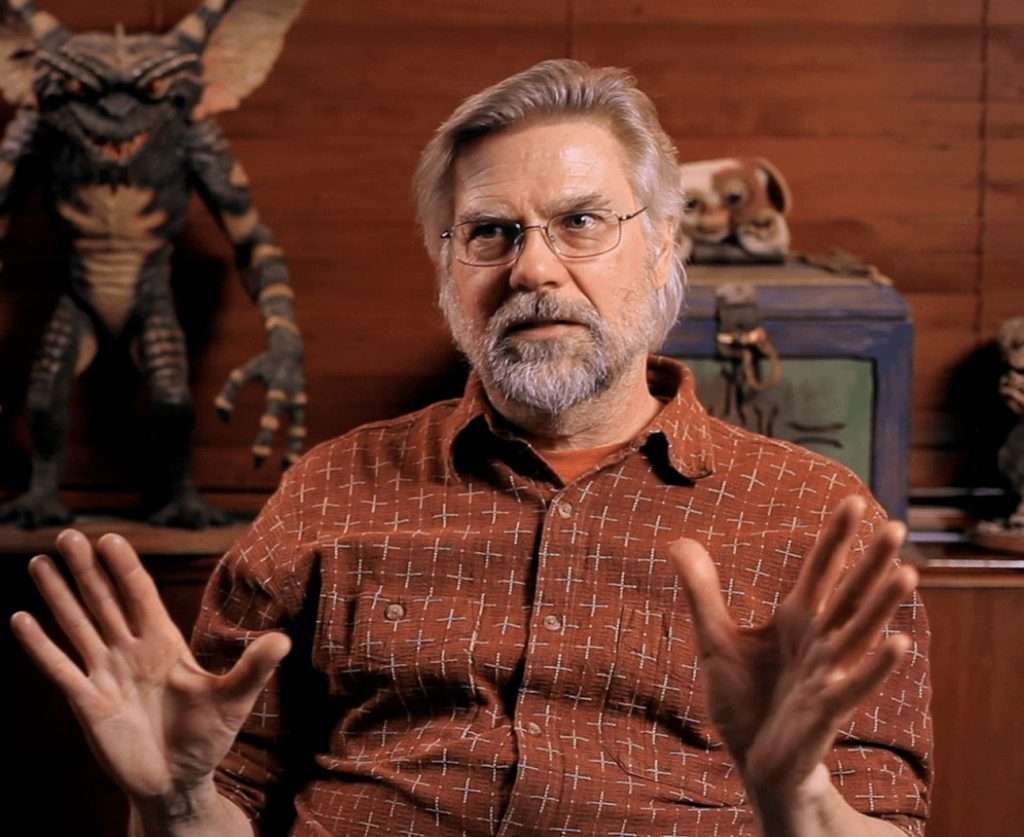
Enter Chris Walas, known for his work on Gremlins and Raiders of the Lost Ark. Walas understood that Brundle’s journey had to feel organic, with his physical state mirroring his psychological unraveling.
Rather than a single explosive mutation, Brundle’s transformation unfolds in seven distinct stages, each with its own FX challenges. The transitions had to feel seamless and believable, requiring a mix of:
Prosthetics
Foam latex applications
Animatronics
Puppetry
Mechanical rigs
Innovative fluids and bladders
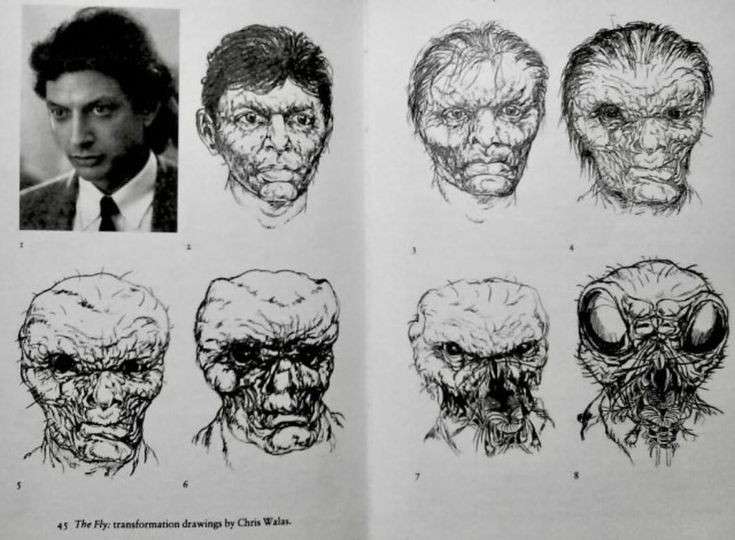
Step-by-Step Breakdown: How Brundle Became Brundlefly
Creating a believable human-to-insect transformation required more than just good makeup—it demanded a meticulous, stage-by-stage evolution that felt both natural and horrifying. Chris Walas and his team approached this challenge with a blend of artistry and innovation, breaking down Brundle’s mutation into distinct visual phases. From subtle changes in skin tone to full-body animatronics, each step was a masterclass in practical effects execution. Here’s how they built the nightmare, one grotesque layer at a time.
1. Early Stages: The Human Fly Begins
In the initial phases, Walas relied on subtle prosthetic applications to show Brundle’s transformation. Small lesions, increased muscle definition, and minor discolorations were gradually introduced. To heighten the illusion, the team used a combination of foam latex appliances and airbrushed paint to make the skin appear irritated and infected.
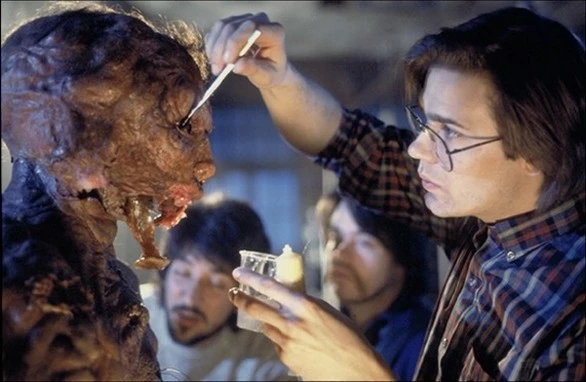
2. Mid-Transformation: The Decay Sets In
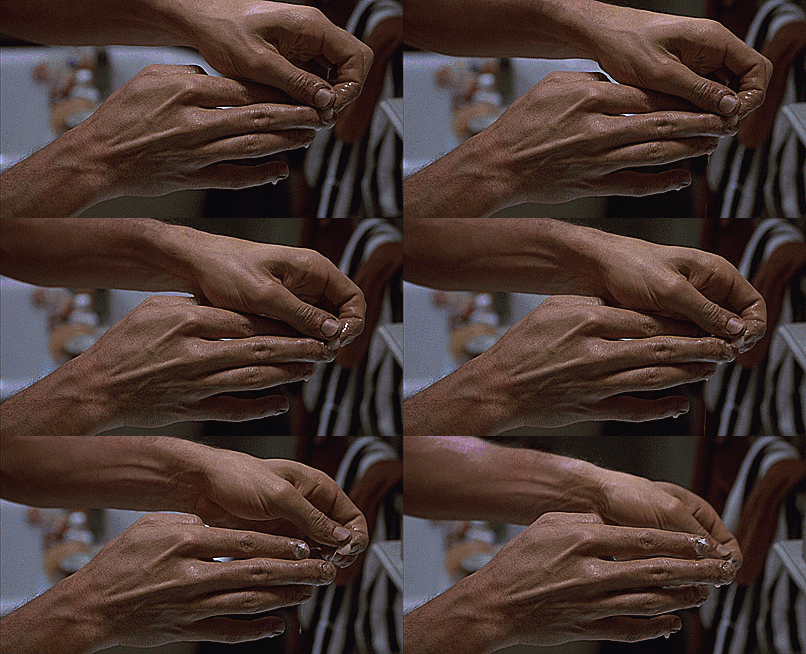
As Brundle’s condition worsens, his body takes on insect-like features. Walas developed animatronic jaw mechanisms to make Goldblum’s teeth fall out realistically, while a series of pus-filled bladders under the skin allowed for disgusting, organic movements. One of the most iconic scenes—where Brundle peels off his fingernails—was achieved using gelatin-based prosthetics that allowed for an unsettlingly realistic effect.
3. Brundlefly Emerges: The Final Horror
By the film’s climax, Brundle has become something far beyond human. Walas and his team created a full-body animatronic Brundlefly suit, worn by stunt performer Mark Wilson, while a separate mechanized puppet head was used for close-ups. The creature’s twitching mandibles, glossy exoskeleton, and compound eyes were crafted from sculpted foam and silicon, hand-painted for an eerily lifelike effect.
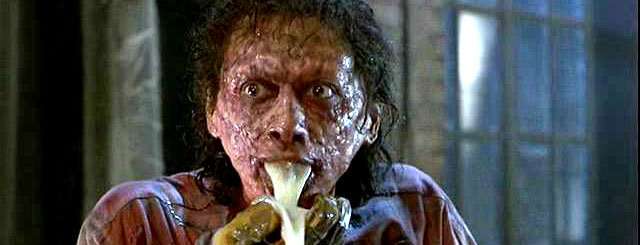
One of the film’s crowning achievements was the “vomit drop” effect, in which Brundlefly regurgitates corrosive enzymes to digest his food (and enemies). The effect was achieved by using a concealed bladder system inside the puppet, allowing Walas to control the fluid’s release for maximum horror.
FX Materials & Techniques Used
To bring this revolting vision to life, Walas and his team relied on an extensive toolkit:
| Material | Use Case |
|---|---|
| Foam Latex | Flexible skin prosthetics, lesions, and facial appliances |
| Silicone | Glossy exoskeleton and compound eye texture |
| Animatronics | Mandibles, eye twitches, limb movement |
| Gelatin | Peeling nails, rotting skin |
| Airbrush Paints | Skin tone blending and infection patterns |
| Bladders & Tubing | Pus blisters, vomit effects |
Walas emphasized layering textures and emotional continuity, ensuring the FX aligned with Brundle’s psychological arc.
The Impact on Horror FX
Chris Walas’ work earned him an Academy Award for Best Makeup in 1987, and with good reason. The Fly set a new standard for practical horror effects, showing that physical, in-camera illusions could be more disturbing—and enduring—than digital trickery.
It also influenced future transformation scenes, including:
An American Werewolf in London – see transformation breakdown here
The Thing – Known for similar grotesque, real-time FX
Tetsuo: The Iron Man – Inspired by bodily mutation themes
Even in the age of CGI, many FX artists cite The Fly as proof that tactile horror is timeless. The audience doesn’t just watch Brundle mutate—they feel it.
Why The Fly’s Transformation Still Works Today
🧠 Emotional Grounding:
Unlike many horror transformations that exist just for shock, Brundle’s decay mirrors his loss of self. Viewers empathize even as they recoil.
🛠️ Practical Realism:
Every twitch, boil, and rupture is real—captured with light and camera, not pixels. That physical presence grounds the horror in reality.
🎨 Creative Ingenuity:
The team worked within tight constraints, pushing the limits of 1980s tech with creative, hands-on solutions.
Final Thoughts: Creating a Nightmare We Can’t Forget
Chris Walas didn’t just create a monster—he engineered a slow, heartbreaking metamorphosis that remains one of the most effective FX showcases in cinematic history. The Fly may have started as a remake, but thanks to Walas’ practical wizardry, it became a benchmark.
Even today, Brundlefly’s ooze, twitches, and body horror continue to inspire and disgust in equal measure.
🧠 Behind the FX will continue spotlighting the artists, tools, and techniques that bring nightmares to life. Check out our in-depth guide on An American Werewolf in London transformation effects.
Walas didn’t just design a monster—he created a nightmare...
References & Further Reading
Note any links below are Amazon Affiliate Links. Purchasing from these links helps support BehindtheFX.com.
-
Documentaries & Featurettes:
- Fear of the Flesh: The Making of The Fly (2005) – A comprehensive documentary on the film’s production, including Chris Walas’ work on the creature effects.
- The Fly Papers: The Buzz on Hollywood’s Scariest Insect – A behind-the-scenes featurette available on various The Fly DVD and Blu-ray releases.
-
Interviews:
- Chris Walas – Fangoria Interview (Issue #61, 1987) – A deep dive into his design process for Brundlefly.
- “Chris Walas on The Fly” – The Rick Baker YouTube Channel (if available) – Occasional discussions between industry legends.
- Starlog Magazine (Issue #114, 1987) – Interviews with Chris Walas and David Cronenberg on the film’s FX.
-
Books:
- Cronenberg on Cronenberg (Chris Rodley, 1997) – Features insights from David Cronenberg on the transformation effects.
- Monsters, Makeup & Effects: Conversations with Cinema’s Greatest Artists (Howard Berger & Marshall Julius, 2023) – Features Walas among other FX greats.
- The Fly (BFI Film Classics) (Nick Roddick, 2003) – A scholarly breakdown of The Fly, including its makeup effects.
Love FX History?
Subscribe to Behind the FX for deep dives into practical movie magic.