Introduction
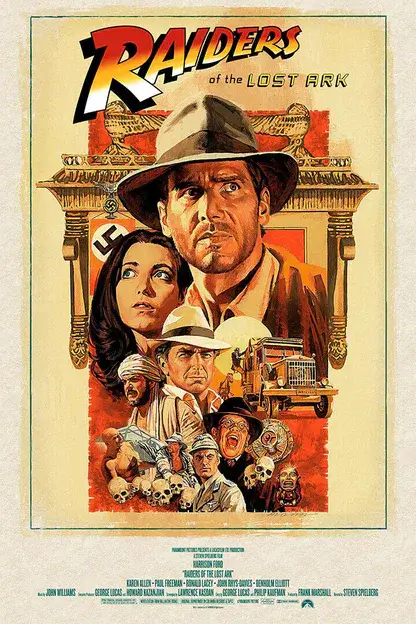
Picture 1981: you’re in a darkened theater, popcorn forgotten, as Raiders of the Lost Ark hurtles toward its climax. The Nazis open the Ark of the Covenant, and—boom—Major Toht’s face melts into a grotesque, bubbling horror. Audiences gasp, some shield their eyes, but nobody forgets the Indiana Jones melting face scene. Achieved without a pixel of CGI, this moment showcases Raiders of the Lost Ark practical effects at their finest. Directed by Steven Spielberg and produced by George Lucas, Raiders was a tribute to 1930s adventure serials, but its groundbreaking visuals, crafted by Industrial Light & Magic (ILM), redefined cinema. From gelatin molds to daring stunts, the Spielberg Lucas ILM collaboration created a tactile, timeless spectacle. Let’s unravel the 1980s movie effects that made movie history and explore why they still captivate fans today.
A Cinematic Nightmare Unleashed
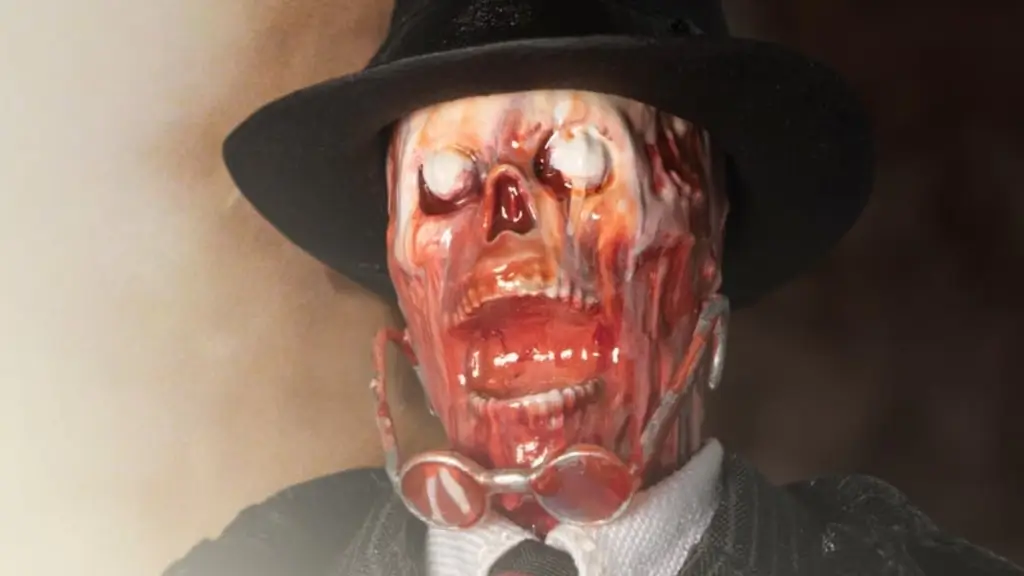
The face melting scene Raiders is the heart of the film’s third act, blending swashbuckling adventure with visceral horror. Indiana Jones (Harrison Ford) and Marion (Karen Allen) are bound as the Nazis, led by Belloq (Paul Freeman), unleash the Ark’s divine wrath. Spielberg’s masterful buildup—eerie winds, a humming Ark, a pulsating glow—sets the stage. Then, chaos erupts: spectral spirits swirl, lightning crackles, and the Nazis face gruesome fates. Major Toht’s face liquefies, Colonel Dietrich’s head collapses, and Belloq’s skull explodes. For 1980s audiences, this was a shock like no other. Kids paused VHS tapes to study the Indiana Jones melting face, sparking playground myths. On X, fans still hail it as “CGI’s untouchable rival.” This scene didn’t just end an adventure; it fused heroism with horror, cementing Raiders as a genre-defining classic.
Chris Walas’s Special Effects: Crafting the Melt
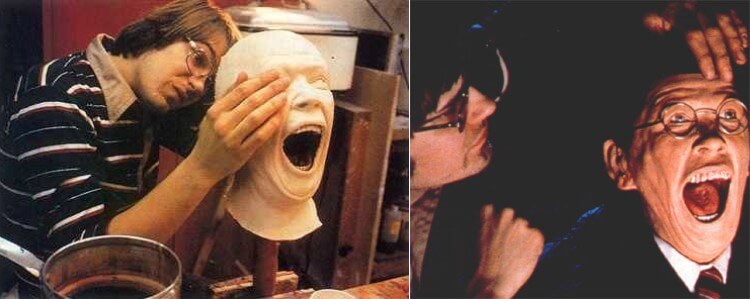
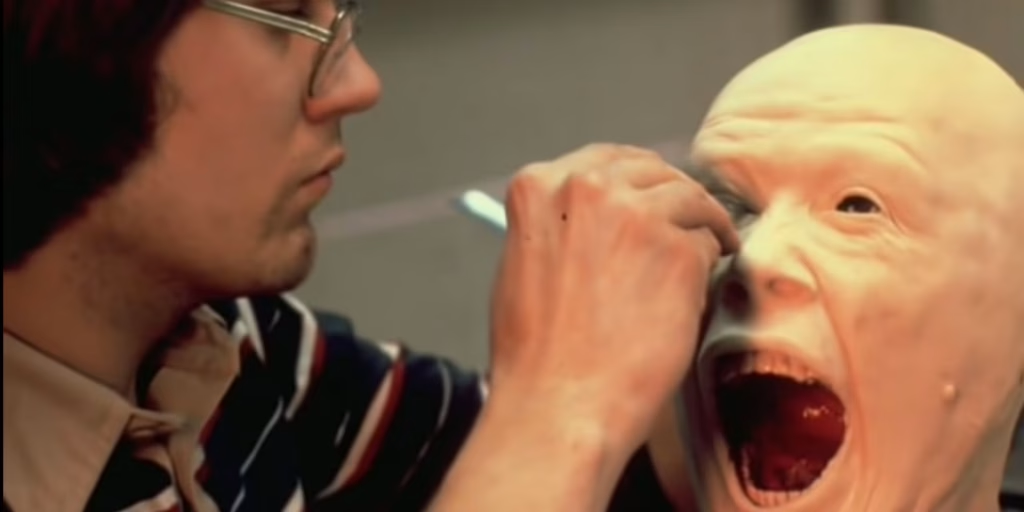
How did Industrial Light and Magic create the face melting scene Raiders? Pure practical genius, led by Chris Walas special effects wizardry. Walas, later an Oscar-winner for The Fly (1986), started with an alginate mold of actor Ronald Lacey’s face. From this, ILM built a multi-layered gelatin head, each layer engineered to melt at different rates, mimicking flesh and bone. Heat guns and lamps slowly liquefied the gelatin, captured in time-lapse to stretch the horror over agonizing seconds. Air bladders added oozing movement, while dental prosthetics and paint perfected grotesque details, like Toht’s screaming mouth. The shot was composited with live-action footage, creating a seamless, gut-wrenching effect. Unlike CGI’s sleekness, the gelatin’s imperfections—bubbles, uneven drips—made it eerily human. This ILM practical effects history moment remains cinema’s most iconic practical effect, a testament to 1980s movie effects artistry.
Want to know more? Check out our post
The Monster Maker: How Chris Walas Brought The Fly to Grotesque Life
A Practical Effects Showcase Beyond the Melt
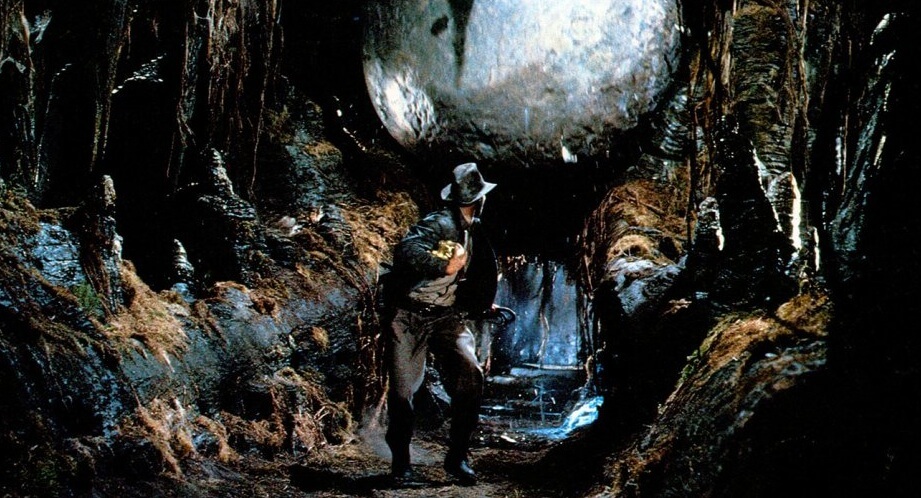
The Indiana Jones melting face grabs headlines, but Raiders of the Lost Ark practical effects shine throughout. Colonel Dietrich’s head deflates using a vacuum-formed latex mask, collapsing as air was sucked out. Belloq’s explosive demise? A plaster cast packed with fake blood and squibs, detonated for visceral impact. The Ark’s ethereal spirits blended backlit puppets, underwater photography, and hand-painted animation, creating an otherworldly glow without CGI. Beyond the Ark, the boulder chase used a 12-foot fiberglass prop rolled on tracks, while the truck chase saw stunt legend Terry Leonard dragged beneath a moving vehicle—no green screen required. ILM’s mastery of prosthetics, miniatures, and forced perspective made Raiders’ world feel tangible, from dusty tombs to Nazi camps. These 1980s movie effects didn’t just dazzle; they anchored the fantastical, captivating audiences then and now.
Spielberg, Lucas, and ILM: A Practical Philosophy
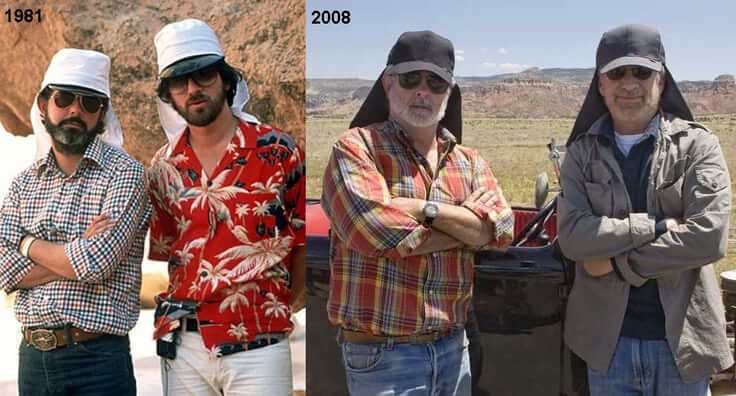
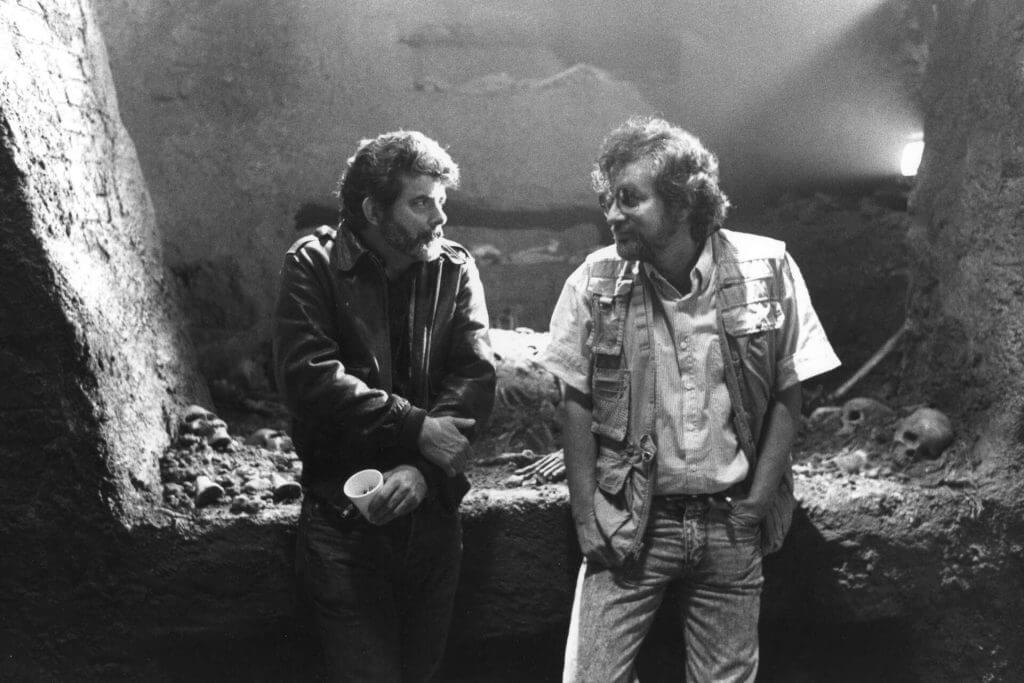
In 1981, CGI was a distant dream, and the Spielberg Lucas ILM collaboration championed practical effects. Spielberg, fresh off Jaws, believed tangible effects sparked authentic actor reactions, famously saying, “If the actors can’t see it, neither can the audience.” He pushed ILM to make the Ark’s supernatural power as real as Indy’s fists. Lucas, the Star Wars innovator, viewed ILM as a creative lab, pioneering techniques like time-lapse melting and advanced compositing. Anecdotes reveal their passion: Spielberg reportedly giggled as the gelatin head oozed, knowing it would stun audiences. ILM’s team—legends like Walas and Richard Edlund—tackled impossible challenges, rigging prosthetics and miniatures that blended seamlessly. The ILM practical effects history gave Raiders weight: the boulder’s rumble, the Ark’s glow, the squibs’ pop. This commitment made the film’s magic undeniable.
Why the Melting Face Still Haunts
Why does the face melting scene Raiders still chill us? It’s the raw power of Raiders of the Lost Ark practical effects. Unlike CGI, which can age poorly, practical effects carry gritty authenticity—you can almost smell the gelatin, feel the heat. John Carpenter, director of The Thing, said practical effects “hit you in the gut” because they’re real objects in real space. For ‘80s kids, pausing Raiders on VHS to dissect the Indiana Jones melting face was a ritual; today, Reddit threads geek out over ILM’s craft. On X, fans call it “the grossest, coolest thing in movies.” The slow-motion melt triggers primal revulsion, its imperfections eerily human. This tangible horror, laced with nostalgia, keeps Raiders in our nightmares and hearts, proving 1980s movie effects endure.
Inspiring a Generation of Filmmakers
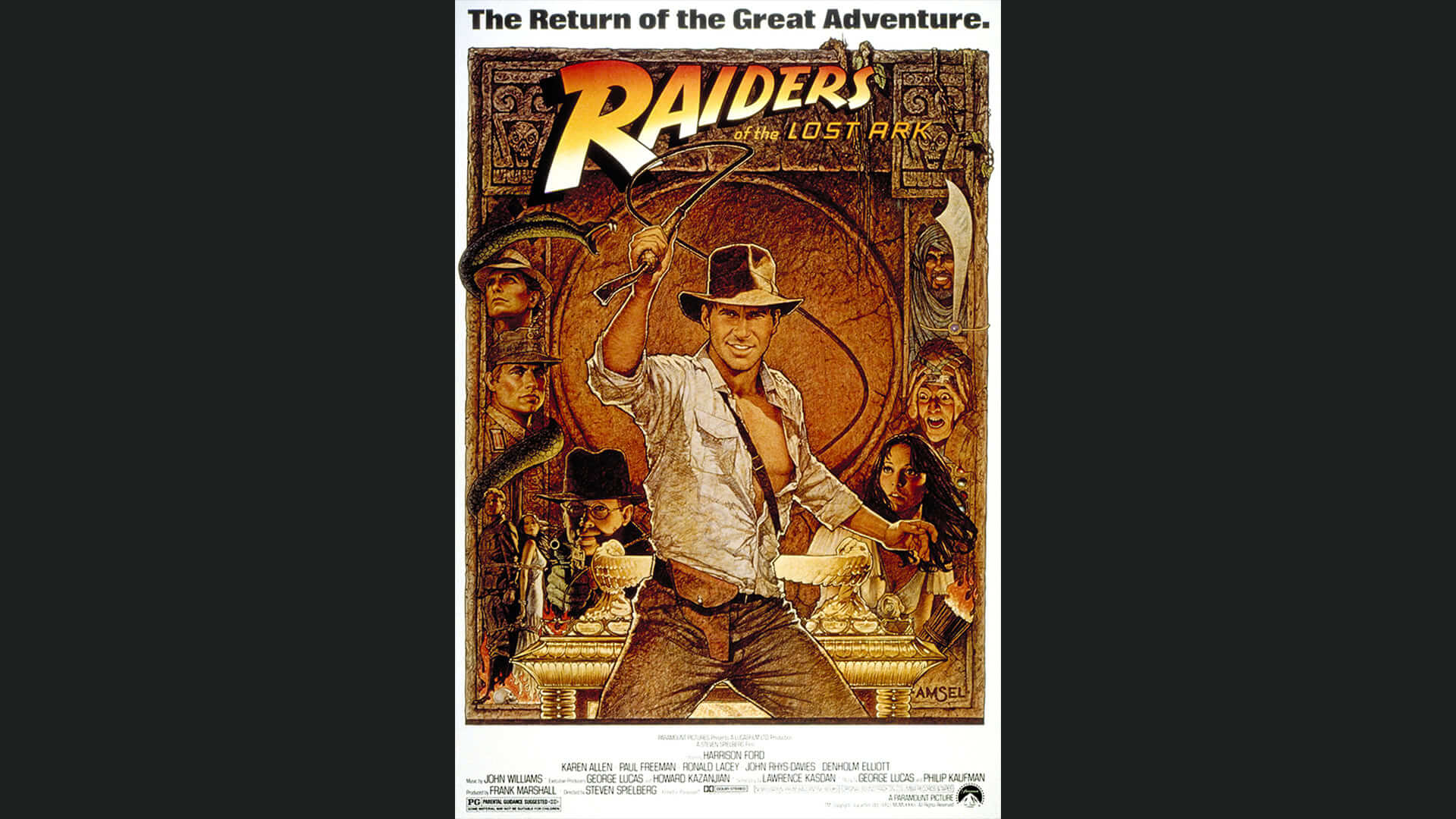
Raiders didn’t just entertain—it reshaped cinema. Its ILM practical effects history became a blueprint for blockbusters. Spielberg’s Jurassic Park (1993) mixed animatronics with CGI, echoing Raiders’ tactile roots. The Thing (1982) leaned on similar Chris Walas special effects techniques for body-horror. Modern directors like J.J. Abrams (Star Wars: The Force Awakens) and Christopher Nolan (The Dark Knight) cite Raiders as inspiration. Mad Max: Fury Road (2015) owes its visceral intensity to Raiders’ legacy. On X, filmmakers share tales of watching Raiders as kids and chasing its magic. Indie horror embraces practical effects as authenticity’s badge, showing audiences crave real over digital polish. The Spielberg Lucas ILM collaboration proved movies could be bold, visceral, and hands-on, its effects a rallying cry for creatives who get their hands dirty.
Conclusion
The Indiana Jones melting face in Raiders of the Lost Ark is more than a scene—it’s a monument to Raiders of the Lost Ark practical effects. From Chris Walas special effects to the Spielberg Lucas ILM collaboration, it’s a masterclass in cinematic audacity. The Ark’s spirits, Dietrich’s collapse, Belloq’s explosion, and Indy’s stunts all rely on tangible craft, creating a world you can almost touch. That authenticity is why Raiders still thrills, its 1980s movie effects outshining CGI’s gloss. For Behind the FX readers, it’s a call to rewatch Raiders and savor the pre-digital artistry. So, grab your fedora, hit play, and let the face melting scene Raiders steal the show. Want more effects secrets? Dive into behindthefx.com for the full scoop!