Introduction
Gremlins practical effects have left a lasting impression on the world of practical effects that few films have. A perfect blend of horror, comedy, and groundbreaking animatronics, Joe Dante’s Christmas creature feature remains one of the most beloved practical FX-driven films of all time. At a time when CGI was still in its infancy, Gremlins relied entirely on puppetry, animatronics, and clever lighting tricks to bring its monstrous cast to life.
Leading the charge was Chris Walas, a special effects wizard whose team was tasked with making the adorable Gizmo and his mischievous gremlin counterparts feel like living, breathing creatures. Unlike today’s digital effects, Gremlins practical effects had to exist physically on set, interacting with actors in real time. But making tiny puppets feel real—and functional—wasn’t easy.
From on-set disasters to technical innovations that inspired generations of FX artists, here’s how Gremlins pulled off one of the most ambitious practical effects films of its era.
The Challenge of Creating Gremlins Practical Effects
Before the team settled on animatronics and puppetry, early attempts to create the creatures were wildly unconventional. At one point, the production even considered using trained monkeys in gremlin costumes. The idea was quickly scrapped when a test monkey panicked, ripped off the mask, and caused chaos on set. That disaster made it clear: the creatures needed to be completely fabricated using practical effects.
But this presented an entirely new challenge. Gizmo, the film’s adorable protagonist, was too small for traditional puppetry techniques, meaning an intricate animatronic system had to be developed. Meanwhile, the gremlins, who needed to be expressive and chaotic, required multiple puppeteers to operate different body parts. The Gremlins practical effects effects team was up against a massive technical undertaking, but what they created would become legendary.
Behind the Gremlins Practical Effects: Puppets, Rigs, and Stop-Motion
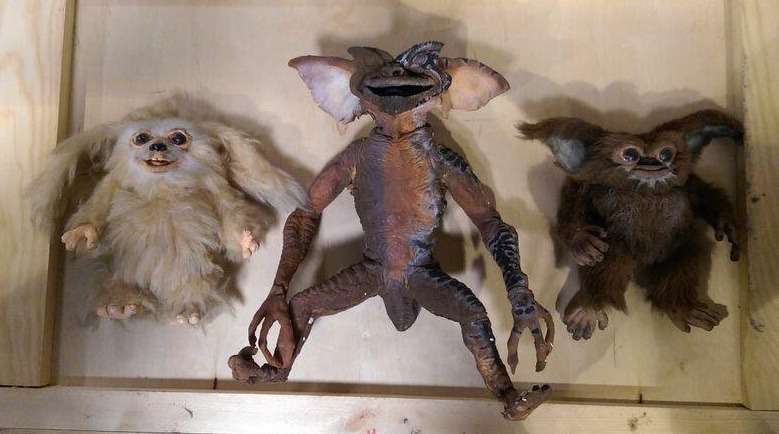
Bringing Gremlins to life required a mix of hand-operated puppets, remote-controlled animatronics, and even stop-motion animation for select sequences.
Gizmo: The Tiny Star with a Big Problem
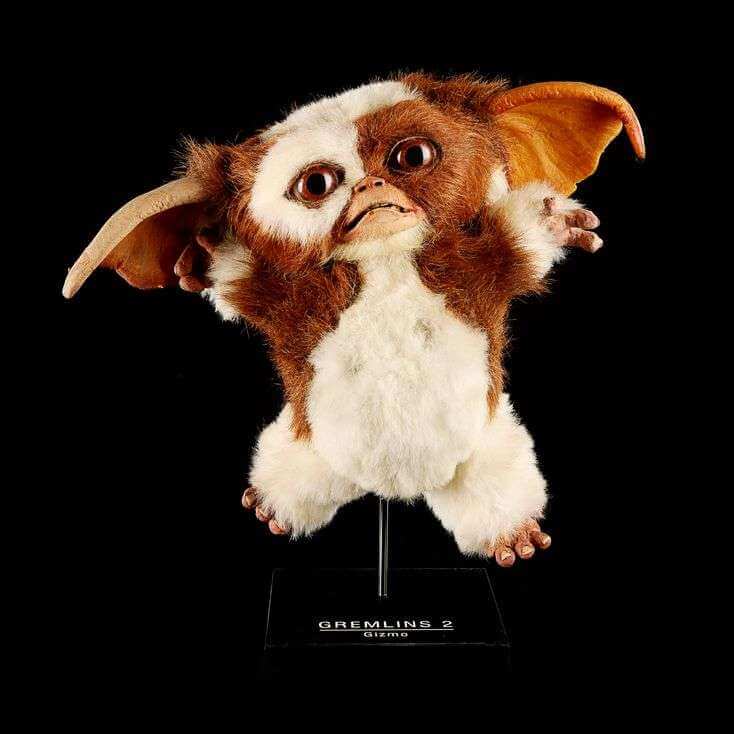
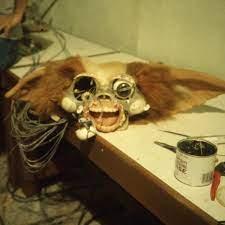
The biggest challenge was creating a convincing and expressive Gizmo, especially given his small size. Most animatronic creatures in film history had been significantly larger, which allowed for more complex mechanics. But Gizmo, measuring only a few inches tall, couldn’t accommodate large servos or mechanical parts inside his body.
To overcome this, the FX team built multiple Gizmo puppets, each designed for specific functions. Some were built solely for facial expressions, controlled remotely to blink, smile, or widen his eyes in fear. Others were used for walking scenes, requiring a different control system entirely. While the result was an incredibly lifelike and expressive Mogwai, he was also notoriously difficult to work with.
On set, Gizmo frequently malfunctioned and broke down, frustrating both the FX team and the actors. At one point, the crew reportedly grew so frustrated with the delicate animatronic that they joked about adding a scene where the gremlins would stomp him to pieces.
But despite the technical difficulties, Gizmo became one of the most memorable animatronic creatures in film history, paving the way for future small-scale animatronic characters, including Baby Yoda (Grogu) in The Mandalorian.
The Gremlins: Chaos in Puppet Form
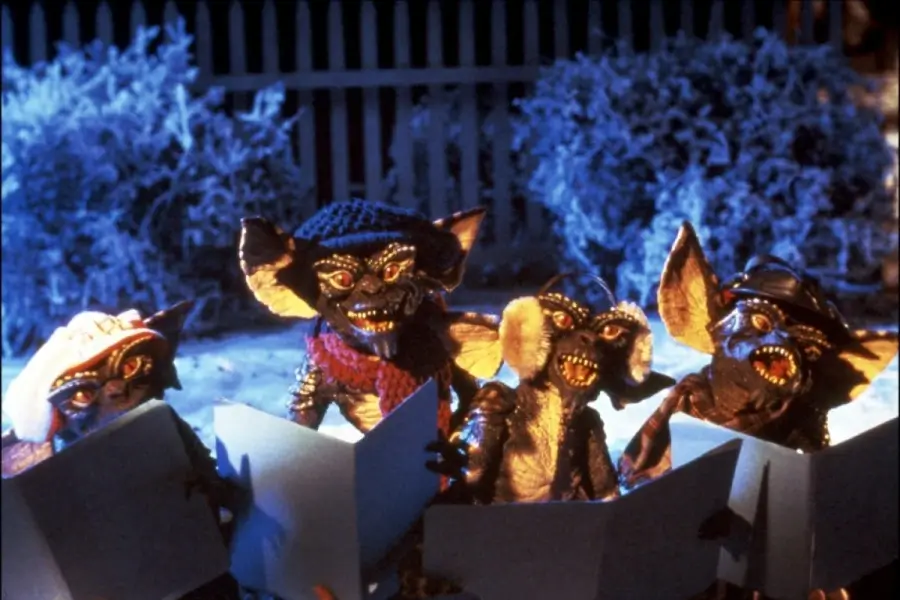
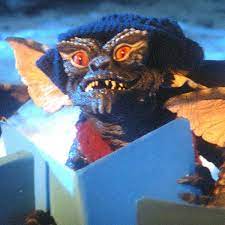
Unlike Gizmo, the gremlins weren’t meant to be cute—they were wild, destructive, and full of personality. Since they needed to interact with the world in a more dynamic, physical way, the FX team relied on larger puppets operated by multiple puppeteers.
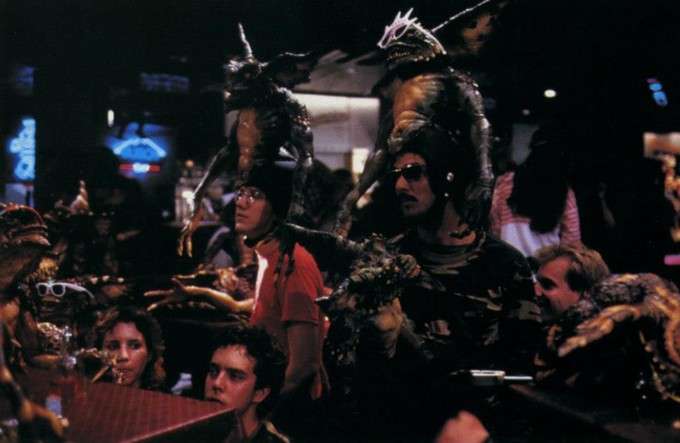
For scenes where multiple gremlins were wreaking havoc (such as the infamous bar sequence), the puppets were mounted on rigs or controlled by rods hidden below the frame. Some shots also used marionette-style puppetry, which gave the illusion of movement without requiring dozens of puppeteers per scene.
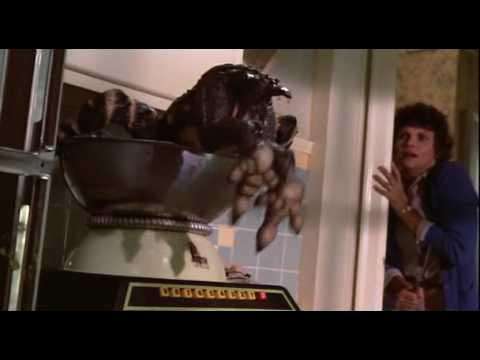
One of the most complicated moments was the scene where dozens of gremlins overrun a bar, drinking, smoking, and terrorizing Kate (Phoebe Cates). Each gremlin required a team of puppeteers, some controlling the arms, others the mouths, and still others adding subtle movements to make them feel alive. It was an incredibly tedious process, but the result was a hilariously chaotic, unforgettable scene.
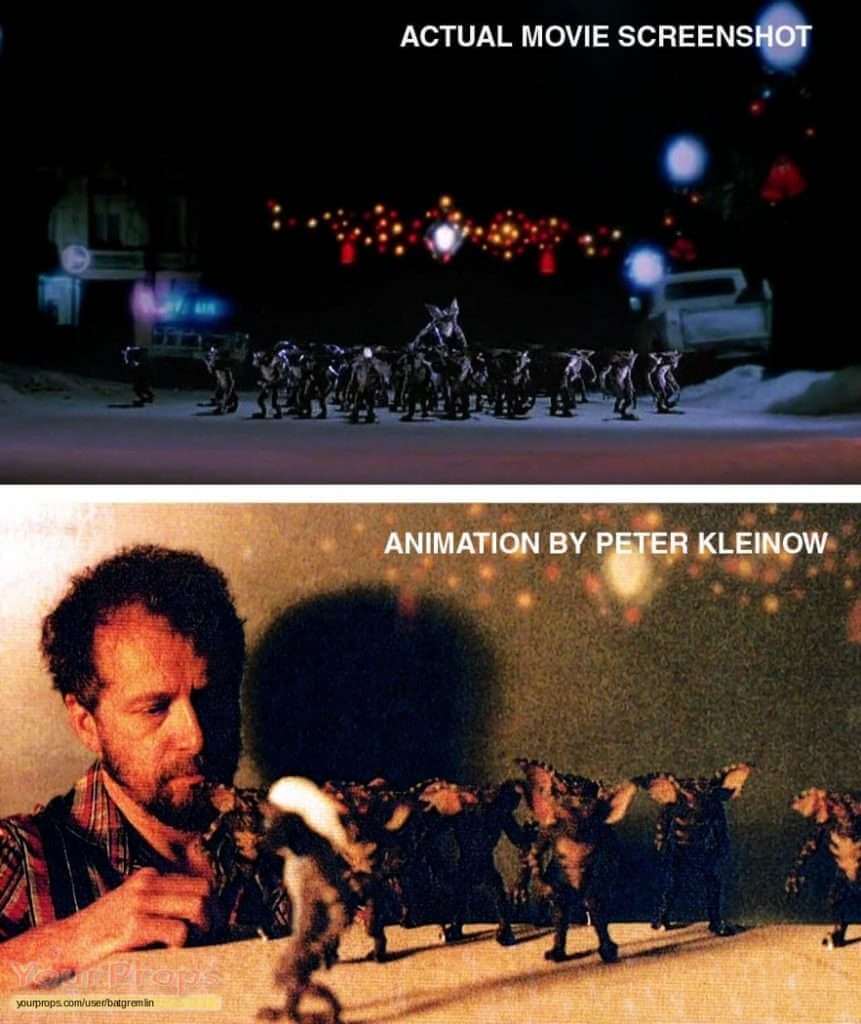
For certain wide shots—like the gremlins marching through town—stop-motion animation was used. These moments were brief but helped expand the scale of the invasion, making it feel like the creatures were everywhere.
Behind the Scenes: Struggles, Triumphs, and Controversy
Working with animatronics and puppets was a slow, painstaking process, and Gremlins was no exception. The FX team often spent hours setting up a single shot, only for a puppet to malfunction and require adjustments. Actors had to react to creatures that sometimes didn’t work, making performances even more challenging.
One of the biggest on-set headaches was Gizmo’s fragility. Since he was so tiny and mechanically complex, he constantly broke mid-scene, causing major delays. Zach Galligan (Billy) later recalled that the crew frequently cursed at Gizmo behind the scenes, frustrated by how often he would malfunction.
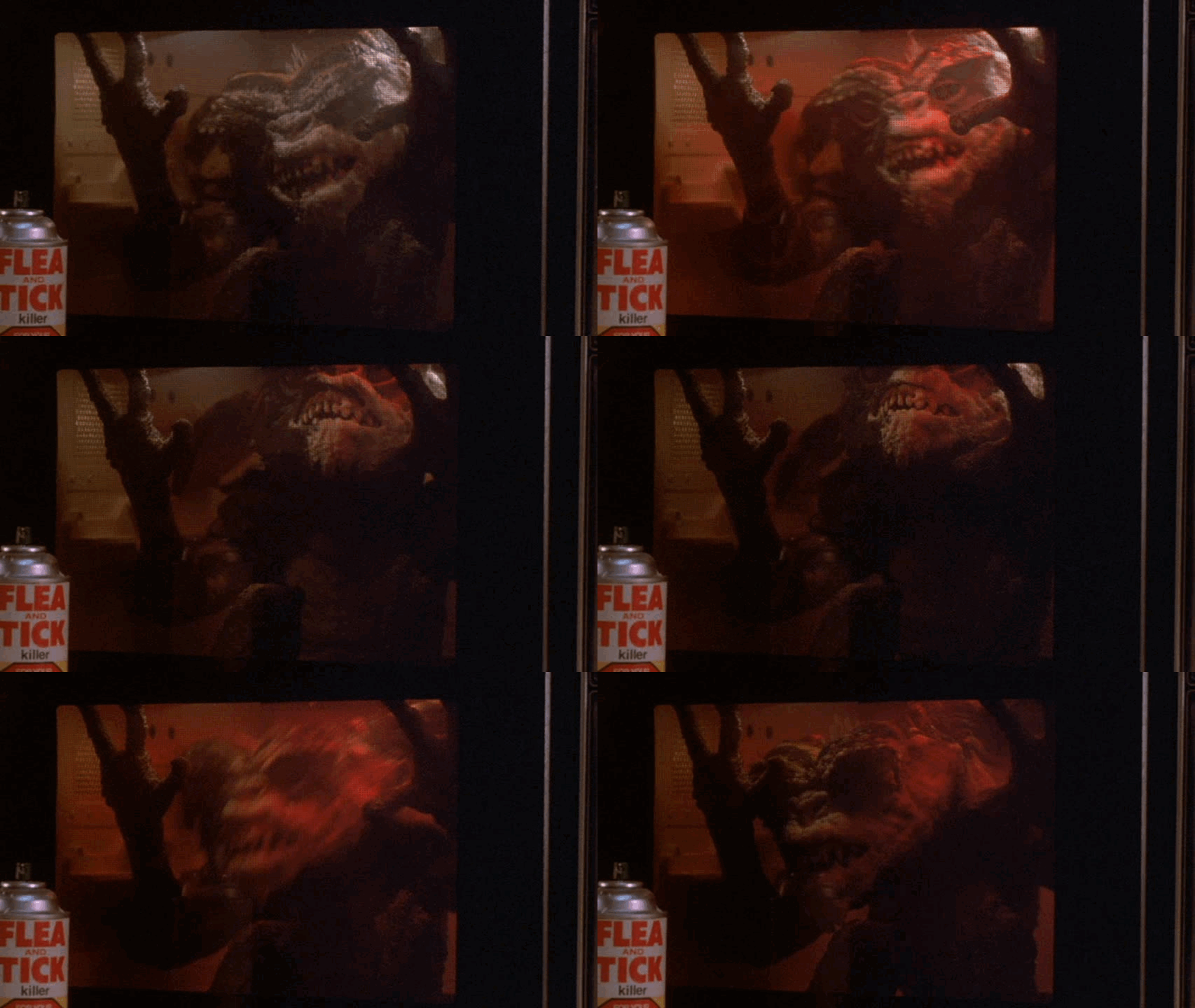
Another moment that sparked controversy was the infamous microwave scene, where a gremlin is killed by being microwaved until it explodes. The gruesome moment, along with the film’s other violent gremlin deaths, pushed Gremlins toward an R-rating. The backlash from parents ultimately led to the creation of the PG-13 rating, which would be introduced later that same year.
The gremlins are clearly the ones have the most fun in the film, trashing the town, going to the bar, smashing things, etc. It's all gleeful chaos, which makes the movie fun.
Zack Galligan Tweet
Legacy of Gremlins Practical Effects in Modern FX
Nearly four decades later, the work done on Gremlins still holds up. The film proved that practical effects, when done well, could create characters that feel more alive than CGI ever could. Its influence can be seen in later films that embraced animatronic creatures, including Critters (1986) and Teenage Mutant Ninja Turtles (1990). Even modern productions, like The Mandalorian, have taken inspiration from Gizmo’s animatronic charm.
The resurgence of practical effects in modern filmmaking owes a lot to films like Gremlins, which demonstrated that real, physical creatures on set create a connection with audiences that digital creations often lack.
“Gizmo paved the way for modern small-scale animatronics.”
Chris Walas Tweet
How DIY FX Artists Can Learn from Gremlins
For aspiring FX artists, Gremlins is a masterclass in practical effects techniques. Some of its methods can be replicated with DIY approaches, including:
🧪 Cable & Rod Puppets: Use basic armature wire and rods to create expressive movement.
🧽 Foam & Latex Skins: Craft soft creature skins using foam latex or gelatin molds.
💡 Lighting Tricks: Use shadows, color gels, and key lighting to add atmosphere and mask imperfections.
🧰 Modular Puppets: Like Gizmo, build specialized puppets for different actions (e.g., blinking vs. walking).
👉 Check out our DIY FX Tools Guide for gear recommendations to get started.
If you’re interested in building your own practical FX creatures, check out the recommended tools and resources below to get started.
Conclusion
Even in the age of CGI, Gremlins remains a shining example of how practical effects can create movie magic. The dedication of Chris Walas and his team paid off, giving audiences some of the most memorable creatures in film history.
What’s your favorite Gremlins moment? Let’s discuss in the comments!
References & Further Reading
Note: Any links below are Amazon Affiliate Links. Purchasing from these links helps support BehindTheFX.com.
Documentaries & Featurettes
- Gremlins: Behind the Screams (2002, Featurette) (Available on Gremlins Special Edition DVD & Blu-ray.)
- The Magic of Gremlins: Inside the Creature Workshop (1984, Featurette) (Available on YouTube & select home video releases.)
- Puppets & Practical FX: The Legacy of Gremlins (2019, Documentary) (Available on Amazon Prime Video.)
- The Evolution of Practical Effects in Horror & Sci-Fi (2021, YouTube Documentary)
- Behind the Monsters: The History of Animatronic Creatures (2020, Documentary) (Available on Apple TV & Amazon.)
Interviews & Articles
- “Chris Walas on Bringing Gizmo to Life” – Cinefex Issue #21 (1984)
- “The Puppetry Nightmares of Gremlins” – Fangoria Issue #78 (1985)
- “How Gremlins Changed Creature FX Forever” – Empire Magazine (2018)
- “Gremlins and the Birth of the PG-13 Rating” – The Hollywood Reporter (2019)
- “From Gremlins to The Mandalorian: The Lasting Influence of Practical Effects” – Star Wars Insider (2020)
Books
- Gremlins: A Visual History – David L. Nathan
- The Winston Effect: The Art and History of Stan Winston Studio – Jody Duncan
- Special Effects: The History and Technique – Richard Rickitt
- The Art of Horror Movies: An Illustrated History – Stephen Jones
- Puppetry and Animatronics for Film and TV – Caroline Astell-Burt