
I. Introduction
Remember that heart-stopping moment in Die Hard when the elevator explodes, sending a fireball roaring through the shaft—just missing John McClane by inches?
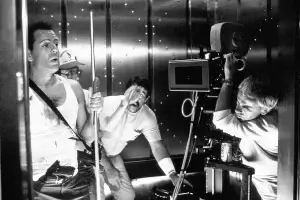
Die Hard’s explosive scenes are one of those 80s action movie stunts that still leaves audiences breathless. But what makes it so unforgettable isn’t just the choreography—it’s that everything you saw was real.
Director John McTiernan, a purist when it came to practical effects, refused to rely on digital shortcuts. Instead, his team built, rigged, and detonated their way through Die Hard’s most jaw-dropping moments. From the elevator explosion to McClane’s bone-crunching falls, every stunt was executed in-camera—no CGI fakery.
Similar commitment to in-camera chaos can be found in horror’s most jaw-dropping moments—these 5 practical FX scenes still shock us today.
Today, we’re pulling back the curtain on how Die Hard was filmed, revealing the sweat, ingenuity, and controlled chaos behind its most iconic scenes.
II. The Elevator Explosion: A Symphony of Destruction
Building the Illusion of Chaos
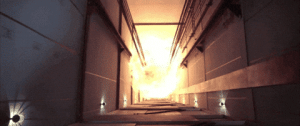
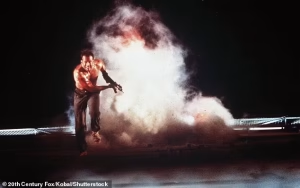
The elevator explosion scene is a masterclass in practical explosion techniques. Instead of using miniatures or post-production tricks, McTiernan’s crew constructed a full-scale elevator shaft on a soundstage. Breakaway walls, a functional elevator car, and carefully placed explosives turned the set into a controlled war zone.
-
-
- The Fireball Effect: The team used gasoline vapor and air mortars to propel flames upward, creating the illusion of a blast erupting from below.
- Timing Was Everything: Bruce Willis had to leap away at the exact moment the charges detonated—just inches from the real flames.
- Debris Rigging: Shattered glass and flying wreckage were pre-positioned to enhance the chaos.
-
The Mechanics of the Blast
Special effects coordinator Al DiSarro orchestrated the explosion like a high-stakes concert. High-speed cameras captured every millisecond, ensuring the fireball looked massive while keeping Willis safe.
???? DIY Tip: Want to recreate a (tiny, safe) version for a short film? Try compressed air and cornstarch for a non-flammable “blast” effect. (Always test in a controlled environment!)
For more low-budget atmosphere FX ideas, check out our DIY fog and smoke effects guide—perfect for action shorts or sci-fi scenes.
III. The Stunts and Falls: Real Danger, Real Impact
Yippee-Ki-Yay: The Art of Stunt Coordination
Bruce Willis performed many of his own stunts, but the film’s most dangerous moments were handled by professionals.
-
-
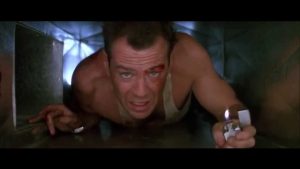
- The Air Duct Crawl: Willis actually squeezed through claustrophobic vents—no green-screen trickery.
- The Roof Jump: The infamous “hose tie-off” fall was performed by a stuntman on a controlled descent rig, mimicking free fall without the risk.
-
Shattering Glass and Breaking Barriers
Die Hard’s glass-breaking stunts were brutally real.
-
-
- McClane’s Bloody Feet: The scene where he walks barefoot over broken glass? Real tempered glass shards—Willis wore hidden pads, but the pain on his face wasn’t entirely acting.
- Elevator Shaft Falls: Stuntmen used crash pads and hidden cables to simulate deadly drops safely.
-
IV. Gunfire and Explosions: Bringing the Action to Life
Special Effects Makeup and Squibs
Before CGI blood hits, Die Hard used squibs—tiny explosives—to simulate bullet impacts.
-
-
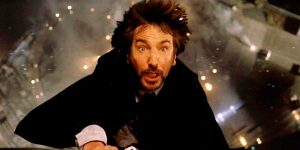
- Hans Gruber’s Death: Alan Rickman’s jacket rippled with hidden squibs, making his fall even more dramatic.
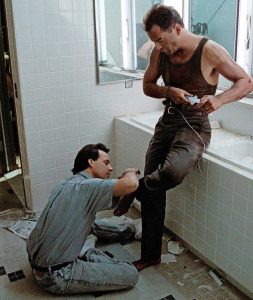
- McClane’s Wounds: Willis’ cuts and bruises were a mix of makeup and real fatigue—he was often genuinely battered from stunt work.
-
The Power of Practical Explosions
Every blast in Die Hard was real.
-
-
- Rooftop Detonation: A mix of air cannons and flammable gas sent McClane (and debris) flying.
- C4 Scene: Real explosives with carefully measured charges made the destruction feel visceral.
-
V. Set Design and Practical Environments
Nakatomi Plaza: A Real-World Stage
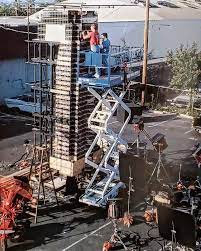
The fictional Nakatomi Plaza was actually Fox Plaza in LA, then under construction.
-
-
- Unfinished Floors = Perfect Sets: The production used raw spaces for shootouts and explosions.
- Lobby Shootout: Real marble and glass amplified gunfire echoes, adding intensity.
-
Creating Authentic Environments
McTiernan insisted on tangible realism.
-
-
- FBI Siege Trucks: Real armored vehicles modified for the film—no CGI.
- Rooftop Showdown: Minimal green screen; most was shot on a real set with matte paintings.
-
VI. Conclusion
Die Hard isn’t just an action classic—it’s a testament to the power of practical effects. From the elevator explosion to McClane’s brutal stunts, every moment was crafted by experts who believed real beats fake every time.
So next time you watch McClane dodge a fireball or leap off a roof, remember: a team of stunt coordinators, pyrotechnicians, and effects artists made it happen—with skill, sweat, and a little bit of madness.
References:
???? Documentaries
-
“Die Hard: The Ultimate Visual History” (Documentary Featurette)
???? Covers behind-the-scenes footage of stunt setups and pyrotechnics
???? Available on the Die Hard 4K/Blu-ray Special Edition -
“Hollywood’s Greatest Stunts” (2003, Discovery Channel)
???? Includes breakdown of Die Hard stunts including air shaft fall & elevator explosion
???? Watch excerpt -
“The Movies That Made Us: Die Hard” (2020, Netflix)
???? Full episode on the making of Die Hard, featuring interviews, rigging details, and fireball creation
???? Interviews
-
Interview with John McTiernan (Director) – Empire Magazine (2007)
???? Talks about commitment to practical stunts and real explosions -
Interview with Al Di Sarro (Special Effects Coordinator) – Cinefex Archives
???? Details on timing the elevator shaft fireball and gas explosions -
Interview with Bruce Willis – Die Hard 30th Anniversary Panel
???? Talks about doing his own stunts and rigging the rooftop jump
???? YouTube Clip from the 2018 event
???? Books
-
“Die Hard: The Ultimate Visual History” by Ronald Brownstein & David S. Cohen (2018)
???? The definitive book on the making of the franchise — FX, stunts, storyboards, and BTS
???? Buy on Amazon -
“Special Effects: The History and Technique” by Richard Rickitt
???? Includes a chapter on 1980s action FX with Die Hard case study
???? Buy on Amazon -
“Blockbuster: How Hollywood Learned to Stop Worrying and Love the Summer” by Tom Shone
???? Covers the rise of action FX in the 80s and Die Hard’s pivotal role
???? Buy on Amazon




1 thought on “How Die Hard’s Explosive Scenes Were Done for Real”
Thanks for this piece. Do you have anything on The Towering Inferno, Backdraft and Inglorious Basterds?