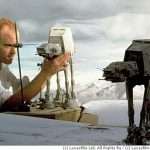
Forget CGI galaxies; there’s a raw, visceral magic in practical effects in horror movies. We’re talking real latex monsters, fiery explosions, handcrafted puppets, and buckets of blood that make you believe the unbelievable. These aren’t just illusions; they’re tangible feats of movie magic, crafted right before the camera’s lens.
There’s a serious resurgence of appreciation for the gritty realism of practical effects in horror movies. Audiences crave that authentic weight and feel, and they know the difference, even if they can’t quite put their finger on it. So, let’s dive into five iconic moments where practical effects in horror movies left us utterly speechless, and still make us ask, “Wait, seriously, how did they do that?”
1. The Blood Elevator: The Shining (1980) – A Flood of
Terror
When it comes to unforgettable practical effects in horror movies, “The Shining’s” elevator blood flood is legendary. Stanley Kubrick’s team built a reinforced hallway set, complete with a massive tank holding 500+ gallons of fake blood. The challenge? Making that blood look terrifyingly real as it surged through the set.
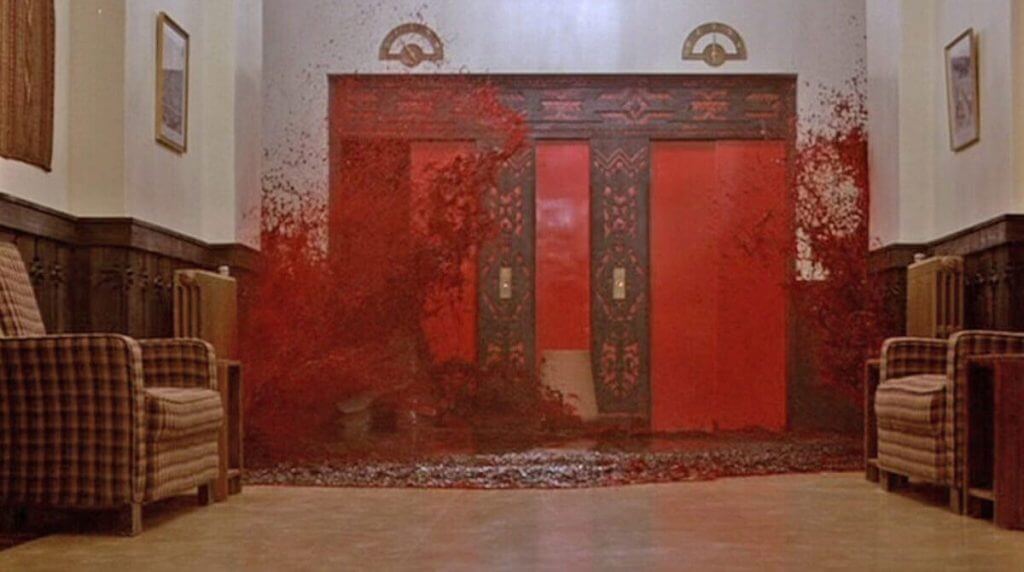
Kubrick, a perfectionist, reportedly shot this sequence nine times, tweaking the flow until it was just right. The result? A wave of blood so real, it lifts furniture and soaks carpets, a testament to the power of practical effects in horror movies that CGI still struggles to match.
2. The Spider Walk: The Exorcist (1973) – Unnatural
Horror
The “Spider Walk” from “The Exorcist” is a masterclass in unsettling practical effects in horror movies. Contortionist Linda R. Hager, not Linda Blair, performed this backwards, crab-like descent down the stairs. Wire rigs and expert makeup made it chillingly believable.
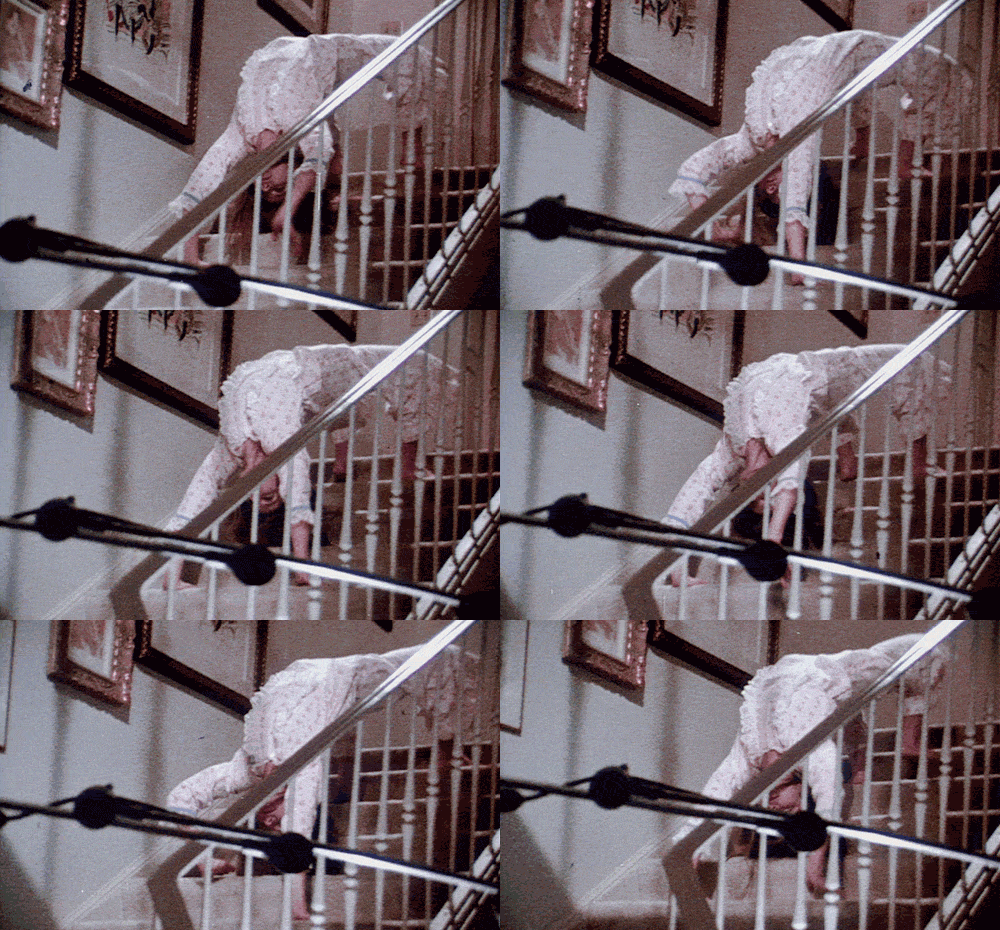
Originally cut, this scene’s raw physicality is what makes it so disturbing. It’s a perfect example of how practical effects in horror movies can create a level of horror that stays with you.
3. Miniature Spacecraft: 2001: A Space Odyssey (1968)
– Space Realism Before CGI
Stanley Kubrick and special effects pioneer Douglas Trumbull crafted incredibly realistic space travel decades before CGI. They built meticulously detailed miniatures, like the 54-foot-long Discovery One.
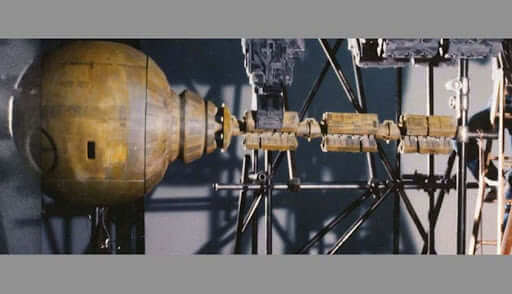
Their revolutionary front-projection system, along with motion control technology (invented for the film), allowed for the seamless, balletic movement of the ships. This is a shining example of how practical effects in movies can create timeless, authentic visuals.
4. The Car Chase: Mad Max: Fury Road (2015) – Real
Action, Real Chaos
“Mad Max: Fury Road” is a modern masterpiece of in-camera chaos. George Miller’s team built over 150 custom vehicles, performing real stunts across the Namibian desert.
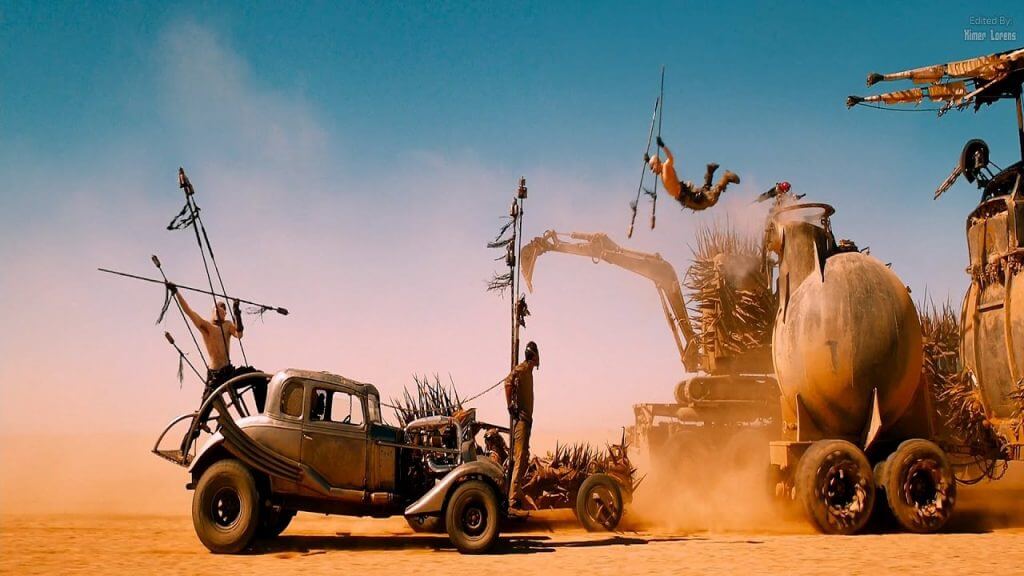
Every jump, crash, and explosion was real. While CGI cleaned up some safety wires, the core action is pure, unadulterated practical effects in action movies. This film proves that real stunts create a visceral impact that resonates with audiences.
5. The Chestburster: Alien (1979) – Shock and Terror
Ridley Scott’s “Alien” delivered one of cinema’s most shocking moments: the chestburster scene. To capture genuine reactions, the cast was kept in the dark.
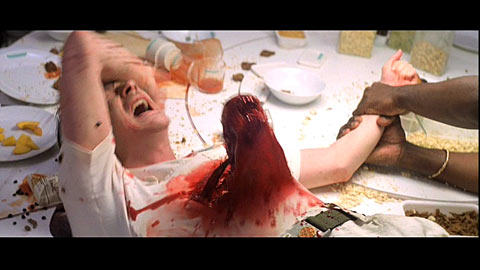
When the alien burst through the prosthetic torso, propelled by compressed air, their horror was real. FX artists Roger Dicken and Carlo Rambaldi’s puppet system, combined with clever editing, created a moment of pure cinematic terror, a pinnacle of practical effects in horror movies.
The Enduring Power of Practical Effects
From cascading blood to contorted stair walks, these moments were crafted, not computed. They’re a testament to the power of practical effects in movies, relying on artists, engineers, and performers to create magic in real time.
These old-school marvels continue to inspire awe and respect, reminding us that sometimes, the most effective movie magic is the kind you can feel.
Want more behind-the-scenes magic? Check out these related posts.
DIY Blood Effects – Make your own blood just like in The Shining!
Rick Baker’s Werewolf Masterpiece: How An American Werewolf in London Set the Standard
Why Practical Effects Still Matter in Modern Filmmaking
References
???? Documentaries & Featurettes
???? The Shining (1980) – The Blood Elevator
- Documentary: Stanley Kubrick: A Life in Pictures (2001)
↳ Includes background on Kubrick’s obsessive attention to detail and his filming process. - Featurette: Making The Shining (by Vivian Kubrick, 1980)
↳ Behind-the-scenes footage including production techniques.
???? The Exorcist (1973) – Spider Walk Scene
- Documentary: The Fear of God: The Making of The Exorcist (1998, BBC)
↳ Covers the spider walk scene, Linda R. Hager’s involvement, and why it was cut. - Special Edition DVD/Bluray Extras:
↳ Includes interviews with director William Friedkin about staging the scene.
???? 2001: A Space Odyssey (1968) – Miniature Effects
- Documentary: 2001: The Making of a Myth (2001, Channel 4/Warner Bros.)
- Interviews with Douglas Trumbull: Available on YouTube and in American Cinematographer archives.
- Featurette: Behind the Infinite: The Making of 2001
???? Mad Max: Fury Road (2015) – Real Stunts
- Documentary: Mad Max: Fury Road – Maximum Fury: Filming Fury Road (2015)
- Featurette: The Road Warriors: Max and Furiosa (available on Blu-ray extras)
- Interviews: George Miller and stunt coordinator Guy Norris in Collider, IndieWire, and The Guardian
???? Alien (1979) – Chestburster Scene
- Documentary: Memory: The Origins of Alien (2019) – dir. Alexandre O. Philippe
↳ A deep-dive into the making of the chestburster scene and its mythological/symbolic roots. - Making Of: The Beast Within: Making Alien (2003)
- Featurette: Experience the Terror (Alien Quadrilogy Box Set)
???? Articles & Online Interviews
- American Cinematographer Magazine Archives
↳ Covers Alien, 2001, and The Shining in extensive technical detail. - Vulture, “The Oral History of the Chestburster Scene in Alien”
↳ Interviews with cast and crew, recounting the chaos of filming the scene. - The Guardian – “How they made The Exorcist’s spider walk scene terrifying again”
- IndieWire – “How George Miller Built the Real Fury Road”
- Collider – Interviews with George Miller, Guy Norris, and Tom Hardy about the stunt work.
???? Books
- “The Making of Alien” – J.W. Rinzler
↳ A comprehensive look at every stage of production with concept art and FX breakdowns. - “Kubrick’s Total Cinema: Philosophical Themes and Formal Qualities” – Thomas Allen Nelson
↳ Covers Kubrick’s perfectionism and technical innovations. - “Future Noir: The Making of Blade Runner” – Paul M. Sammon
↳ While not mentioned directly, includes background on FX artist Carlo Rambaldi, who also worked on Alien. - “Special Effects: The History and Technique” – Richard Rickitt
↳ A detailed reference book covering practical effects throughout cinema history, including many mentioned films.