An American Werewolf in London Transformation: FX Secrets Behind the Horror
Introduction
When it comes to cinematic werewolf transformations, one sequence reigns supreme: An American Werewolf in London (1981). Directed by John Landis and featuring groundbreaking work by FX master Rick Baker, this transformation scene didn’t just raise the bar—it created an entirely new standard for creature effects.
In an era before CGI, this sequence showed what was possible with pure, hand-crafted practical effects. The result? A painful, visceral metamorphosis that has haunted and inspired filmmakers for over four decades.
Let’s go Behind the FX and explore how this iconic werewolf transformation was made—and why it still holds up today.
Why the American Werewolf in London Transformation Still Stuns
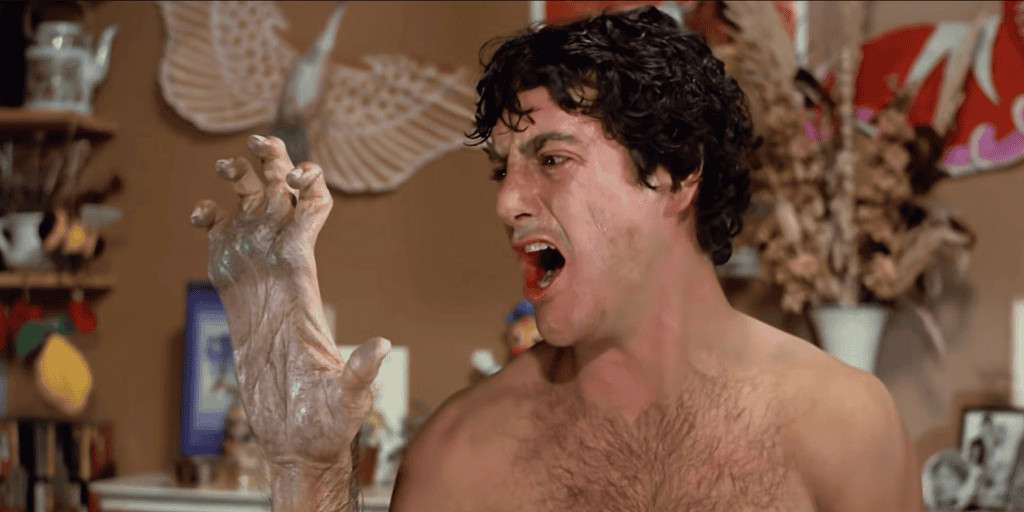
The transformation of David Kessler (played by David Naughton) is unforgettable. Viewers don’t just see the change—they feel every stretched tendon, popping joint, and horrified gasp.
Unlike earlier werewolf films that used crossfades or static cutaways, Landis demanded something revolutionary: a real-time, fully visible, agonizing transformation.
How It Was Made: FX Breakdown of the Werewolf Transformation
Rick Baker had been dreaming of creating a transformation like this for years. Finally, with American Werewolf, he got his chance—and complete creative control.
The Core Techniques Used:
-
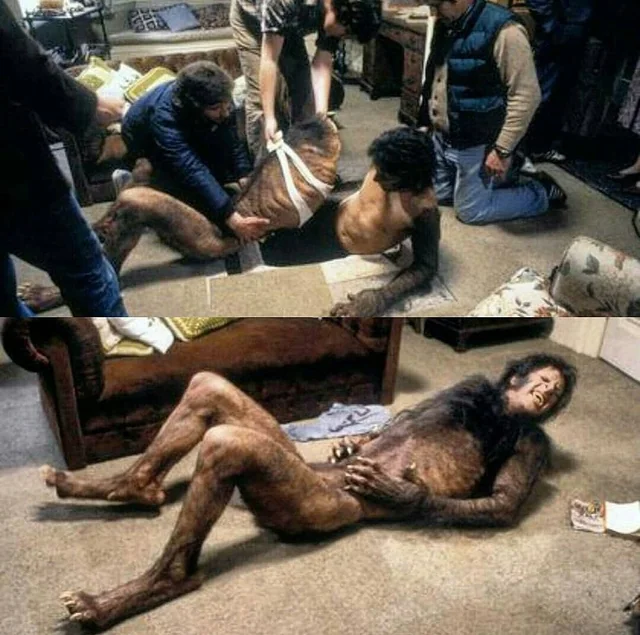
Foam Latex Prosthetics: Each piece was hand-sculpted and tailored to actor David Naughton’s face and limbs, then layered to allow gradual transformation shots.
-
Animatronic Limbs: Mechanically stretched arms, hands, and legs were crafted to simulate bones growing unnaturally.
-
Bladders Beneath Latex: Air-filled bladders were inserted under prosthetic “skin” to mimic rippling muscles and tendons.
-
Hair Growth Gags: Reverse-filmed hair-punching and mechanical expansion were used to simulate fur sprouting across David’s body.
-
Multiple FX Setups: The transformation was filmed in segments with different setups for each body part to seamlessly stitch together a complete change.

Tools of the Trade: What Rick Baker Used
Creating such a complex transformation required a massive toolkit. Here’s a look at some key materials and tools:
-
Foam Latex & Gelatin Appliances – for skin and muscle texture.
-
Wire Armatures & Hydraulic Joints – for limb stretching rigs.
-
Dental Acrylic & Resin – for fang and claw construction.
-
Hair Punching Tools – for realistic fur application.
-
Air Compressors & Syringes – to inflate internal bladders on cue.

The Oscar That Changed Everything
Rick Baker’s work on An American Werewolf in London was so influential that the Academy of Motion Picture Arts and Sciences created the category for Best Makeup in 1982.
The film won the inaugural award, and Baker went on to become a seven-time Oscar winner for his work on films like:
-
The Nutty Professor
-
Men in Black
-
How the Grinch Stole Christmas
This was also a milestone for horror movies—validating them as a showcase for high-level craftsmanship in filmmaking.
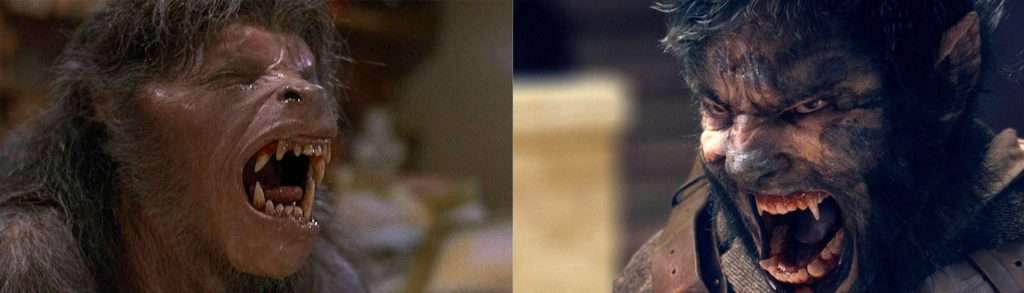
Legacy: Why It’s Still the Best Werewolf Transformation Ever Made
More than 40 years later, fans still hail the transformation as the greatest practical FX moment in horror.
Here’s why it holds up:
1. Tactile Realism
No computer can replicate the weight and texture of real materials. Muscles look like they’re stretching because they are.
2. Storytelling Through Pain
You don’t just see David become a monster—you experience his suffering. The scene becomes part of his character arc.
3. Influence on Other Films
The impact of AAWIL can be seen in:
-
The Howling (1981) – released the same year with a competing (but faster) transformation scene.
-
The Fly (1986) – which pushed body horror further, winning FX artist Chris Walas an Oscar.
-
The Company of Wolves (1984) – blending fantasy and transformation FX.
Interested in more transformations?
Explore our post on The Fly transformation effects for more FX mastery.
Fun Fact: A Transformation Sequence Shot in Segments
The full transformation scene runs about 90 seconds on screen, but it took weeks to shoot. Each part—arm, leg, spine, face—was filmed in isolation using different rigs, then carefully edited to look seamless.
That editing, combined with real-time lighting, made it feel like one continuous horrifying moment.
Final Thoughts: Why Practical FX Still Matter
While CGI has opened new creative doors, there’s a reason FX fans and filmmakers continue to study An American Werewolf in London. The transformation is a masterclass in practical FX, from concept to execution.
Rick Baker didn’t just build a werewolf—he created an experience. One that hurt. One that scared. One that changed horror forever.
Want more creature transformations and behind-the-scenes FX secrets?
Subscribe to Behind the FX and follow us for deep dives into the best practical effects in film history.
Share this post:
Promote on X/Twitter with tags like #AmericanWerewolf #HorrorMovies #PracticalEffects #RickBaker #80sHorror
Support Behind the FX
Note any links below are Amazon Affiliate Links. Purchasing from these links helps support BehindtheFX.com.
References & Further Reading
Note any links below are Amazon Affiliate Links. Purchasing from these links helps support BehindtheFX.com.
Documentaries & Featurettes
- Beware the Moon: Remembering An American Werewolf in London (2009) – A full-length documentary on the making of the film.
- I Walked with a Werewolf (2009) – A featurette focusing specifically on Rick Baker’s FX work.
- An American Werewolf in London: Making the Monster (Blu-ray bonus feature).
Interviews
- Rick Baker – Fangoria Interview (Issue #20, 1982) – In-depth discussion on the practical effects challenges.
- Empire Magazine’s Oral History of An American Werewolf in London (2016) – Behind-the-scenes stories from Baker and the cast.
- Starlog Magazine (Issue #52, 1981) – Covers the special effects innovations.
Books
- Rick Baker: Metamorphosis (2019) – A definitive book on Baker’s career, featuring AAWIL prominently.
- Monsters, Makeup & Effects: Conversations with Cinema’s Greatest Artists (Howard Berger & Marshall Julius, 2023).
- An American Werewolf in London: A Retrospective (Paul Davis, 2014).